
She straightened the curtains, arranged pale blossoms in slim vases, and folded the blankets with meticulous care. She did not rush to Emily’s bedside. Instead, she lingered in the doorway, observing quietly, understanding that certain kinds of loneliness could not be soothed with cheerful reassurances.
What struck Sarah most was not the child’s wan complexion or the fragile strands of hair just beginning to grow back.
It was the vacancy in her eyes.
Emily seemed physically present, yet impossibly distant at the same time. Sarah recognized that look instantly. It mirrored the hollow ache she herself had carried home each day to an empty house and empty arms.
So she chose patience.
She did not press for conversation. One afternoon she placed a small music box on the table beside Emily’s bed. When the soft melody began to play, Emily turned her head ever so slightly. The movement was barely perceptible—but it was deliberate. From the hallway, Sarah would sometimes read aloud, her voice even and unintrusive, asking nothing in return.
Gradually, Michael began to sense a shift he couldn’t quite define. Sarah did not fill the mansion with chatter or commotion—yet somehow she filled it with warmth. One evening he noticed Emily holding the little music box in her hands, as if she had finally allowed herself to desire something again.
Without ceremony, Michael called Sarah into his study. He didn’t offer a speech. He simply said, “Thank you.”
Weeks drifted by. Trust took root slowly, almost invisibly.
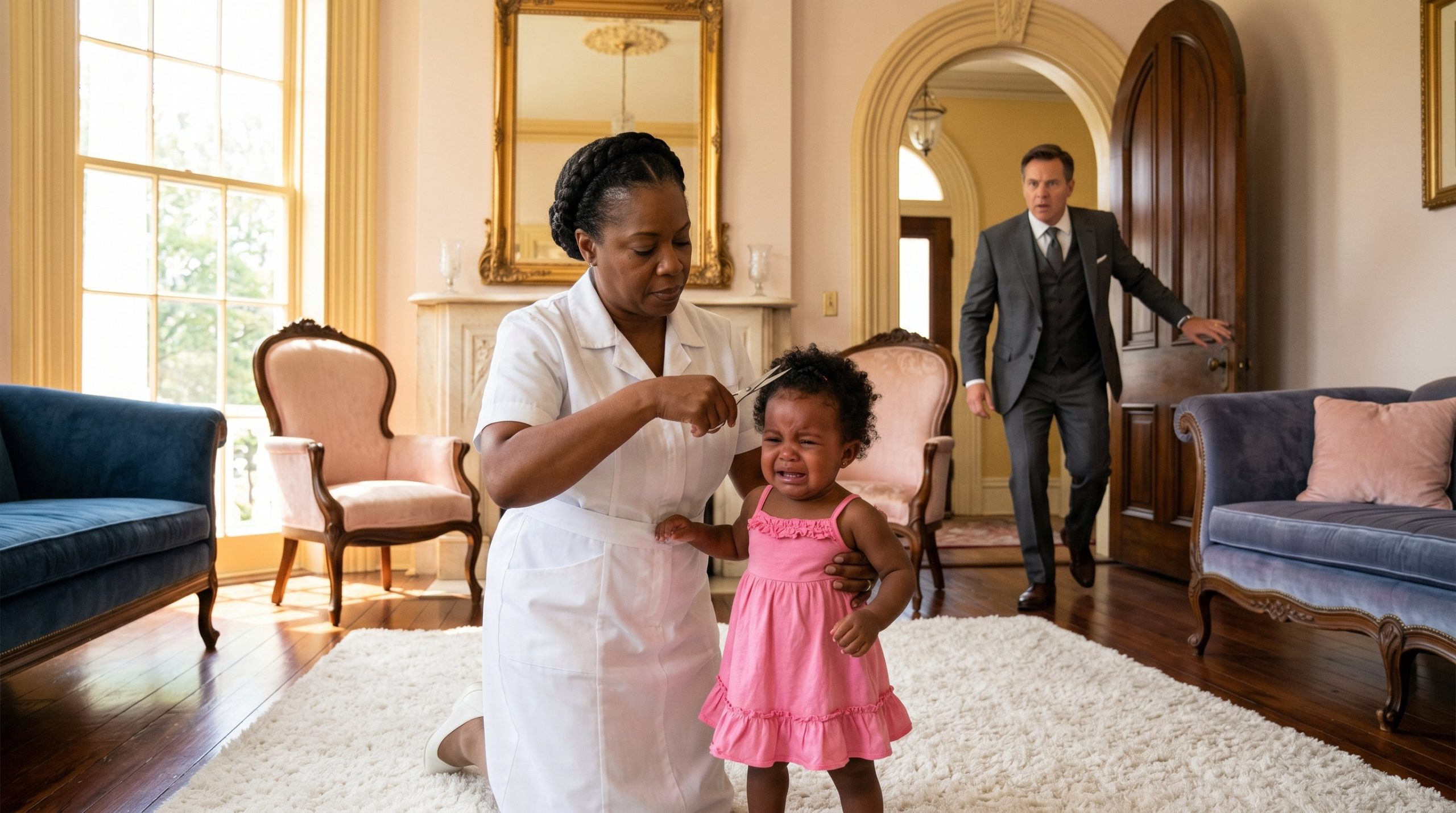
Emily allowed Sarah to brush her soft new hair. And during one of those quiet, ordinary moments, everything changed.
Sarah was drawing the brush gently through the fine strands when Emily suddenly flinched. She grabbed a fistful of Sarah’s shirt and whispered in a voice that sounded as though it had risen from a nightmare.
“It hurts… don’t touch me, Mom.”
Sarah froze.
Not because of the word “hurts”—pain could be explained.
But because of that other word.
Mom.
Emily rarely spoke at all. And this hadn’t sounded accidental. It sounded remembered. Like an echo of something old and frightening.
Swallowing hard, Sarah set the brush aside and answered softly, containing the storm building inside her chest.
“It’s all right. We’ll stop for now.”
That night, sleep never came. Michael had said Emily’s mother was gone. Dead. Then why had that single word carried such sharp, precise emotion? Why had Emily tensed as if bracing for anger the moment she felt discomfort?
Over the following days, Sarah began noticing patterns. Emily startled when someone passed behind her. She stiffened when certain tones of voice rose too suddenly. Most troubling of all, after taking particular medications, her condition seemed to deteriorate rather than improve.
The first real clues emerged in a storage room.
Inside an old cabinet, Sarah found boxes with faded labels, vials and ampules bearing unfamiliar names. Several carried red warning stickers. The expiration dates stretched back years. And one name appeared again and again on the packaging:
Emily.
Sarah photographed everything. That night, she sat awake researching each drug one by one, as though searching desperately for air.
What she uncovered made her blood run cold.
Experimental therapies. Severe adverse reactions. Substances restricted—or outright banned—in certain countries.
This was not cautious, attentive treatment.
It was a map of calculated risk.
She pictured Emily’s small body absorbing dosages designed for something entirely different. Fear surged through her—but beneath it burned something fiercer: a steady, protective anger.
She said nothing to Michael. Not yet.
She had seen him sitting at the foot of Emily’s bed as though his own heartbeat depended on hers. But Emily was in danger—and Emily trusted her.
So Sarah began documenting everything: times, amounts, physical responses. She observed the nurse carefully. She compared the bottles in the bathroom to the ones she had discovered in storage.
The most disturbing part was the overlap.
Medications that should have been discontinued long ago were still being administered.