
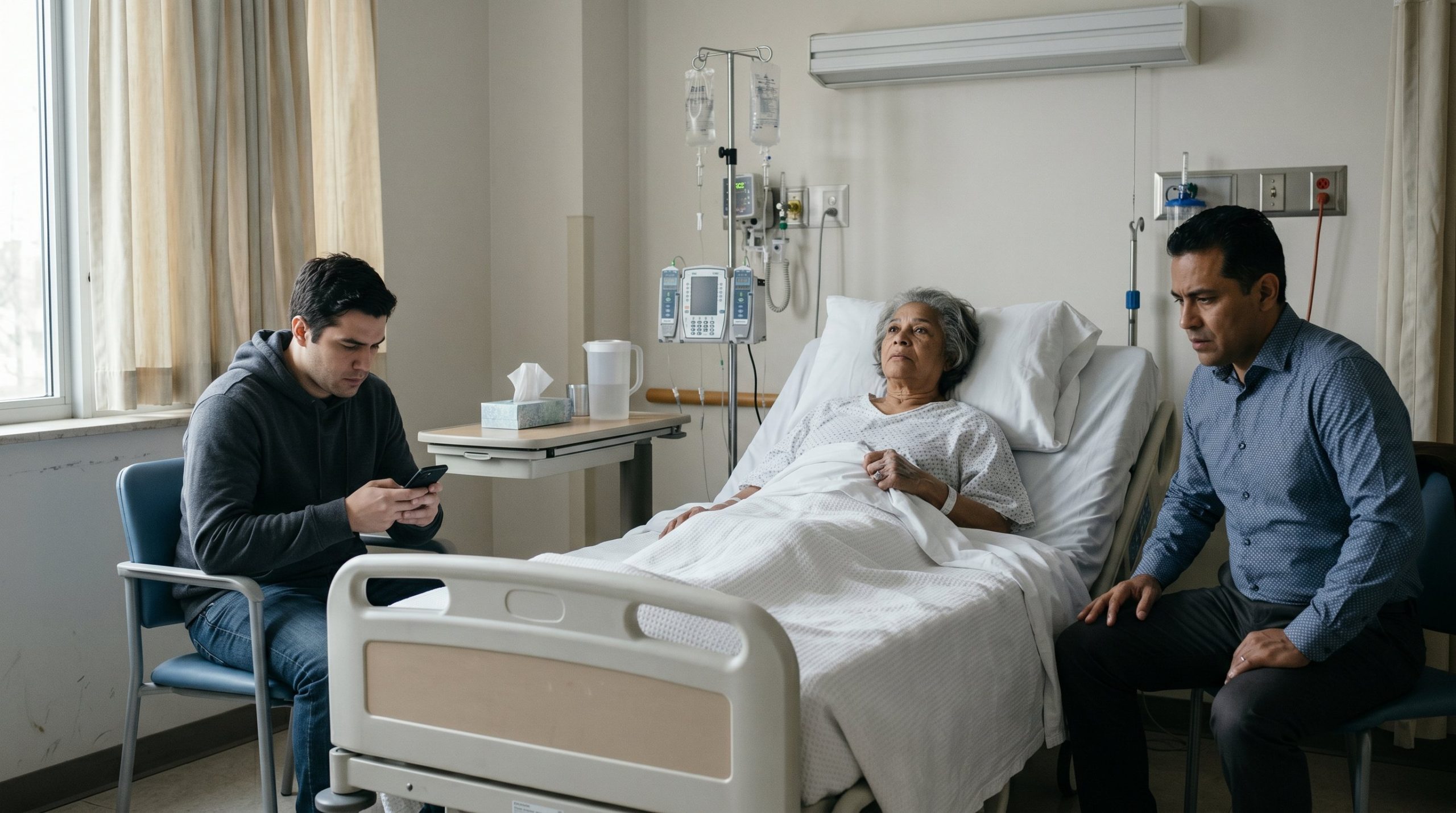
Margaret lay motionless in the narrow hospital bed, one hand resting along the edge of the blanket, her eyes fixed on the pale ceiling above her. After every round of chemotherapy it was the same—an overwhelming exhaustion, a hollowed-out feeling, as if the treatment had drained not only her strength but the very essence of her. Five years had passed since the doctors first spoke the word breast cancer, and from that moment forward, nothing in her life had remained unchanged.
Five years.
Back then, the prognosis had been blunt: three years at most. That was what they had given her. Yet she was still here. Still enduring. Still… breathing.
Though sometimes she no longer understood why she kept fighting.
Her younger son, David, sat beside her, perched on the edge of the stiff hospital chair, scrolling absently through his phone. At thirty-five, he was still young, energetic, and already a successful businessman. He had launched his own company three years earlier, and now it was thriving—more than thriving. A new car, a modern apartment, stability in every direction.
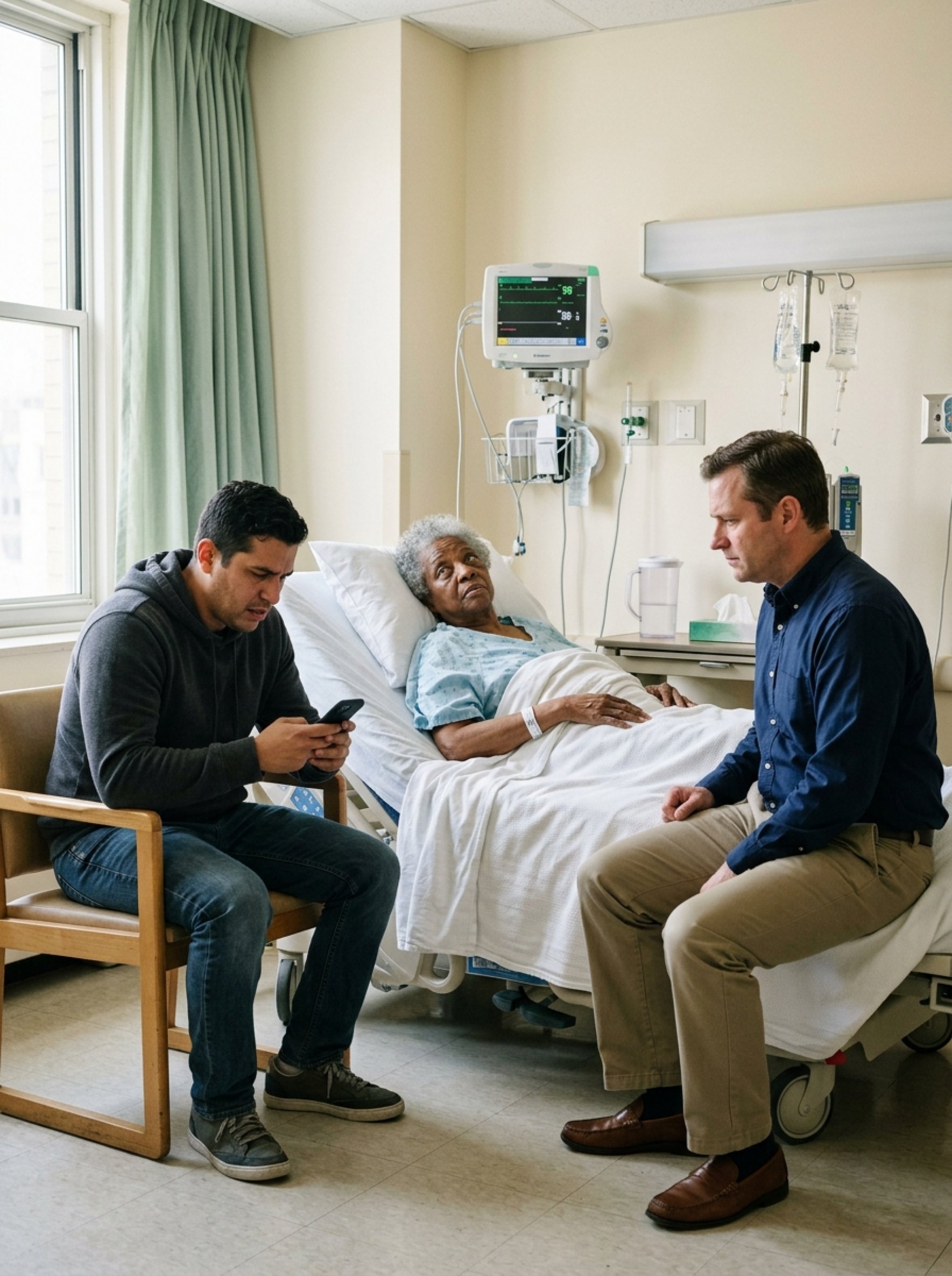
And every single month, without fail, he transferred money to his mother. For medication. For treatments. For specialists.
Margaret had never asked for it—at least not during the first three years. She had insisted on managing alone. But during the last two… the last two years had left her with no alternative. Her modest pension simply couldn’t cover the mounting medical bills. And David—David never waited to be asked. At the start of each month, the money appeared in her account.
But today was different.
Today, she had been the one to ask.
Her doctor had told her about a new therapy. Experimental. Extremely expensive. But it might—just might—buy her a few more years.
And Margaret wanted those years.
When David heard the amount, the color drained from his face. He didn’t refuse. He didn’t protest. He only gave a short nod and said quietly, “Okay, Mom. I’ll figure it out.”
Still, she had seen it in his expression. She knew the number was staggering. Maybe more than he could realistically manage.
As she lay there now, with David staring at his phone beside her, the door opened and someone else stepped inside.
Andrew.
Her older son. Forty-two years old, married, father of two, steady job, a house in the suburbs—an orderly, predictable life.
Andrew hadn’t contributed a single dollar toward his mother’s treatment in three years.
Margaret had never confronted him about it. She didn’t need to. She knew the reason. His wife, Erica. Margaret had once overheard her—purely by accident—two years earlier. Andrew had been speaking to Erica in the hospital corridor while Margaret was returning from the restroom.
“She’s been sick for five years,” Erica had said sharply. “Five years. When will it finally end? How long are we supposed to keep paying for this?”
Margaret had heard every word.
After that, Andrew’s visits grew less frequent. And when he did appear, he kept things brief—stood beside the bed, asked, “How are you, Mom?” nodded a few times, and then left.
But now he was here.
David looked up from his phone. “Hi, Andrew,” he said softly.
Andrew inclined his head. “Hey. How’s Mom doing?”
David glanced toward the bed. Margaret forced her lips into what she hoped resembled a smile.
“Better,” she answered quietly, though it wasn’t true.
Andrew pulled up the second chair and sat on the opposite side of the bed. The room fell into silence—heavy, uncomfortable silence.
Then David rose to his feet.
“I’m going to grab a coffee,” he said. “Andrew, you coming?”
Andrew gave a short nod and stood.
Margaret watched them carefully. She knew exactly what would happen next. David would tell his brother the cost of the new treatment. He would say the number out loud. And Andrew… Andrew would repeat what Erica had always said.
Enough. She’s been ill for five years. Five years.
But Margaret could do nothing. She remained still, staring at the doorway as her sons stepped into the hallway.
The door swung shut behind them.
She was alone.
And then she heard it.
Voices. Low and tense, coming from the corridor. Andrew and David talking. They weren’t shouting, but their words carried.
Because the door… the door hadn’t fully closed.
Margaret slowly turned her head toward it. The door was slightly open.