
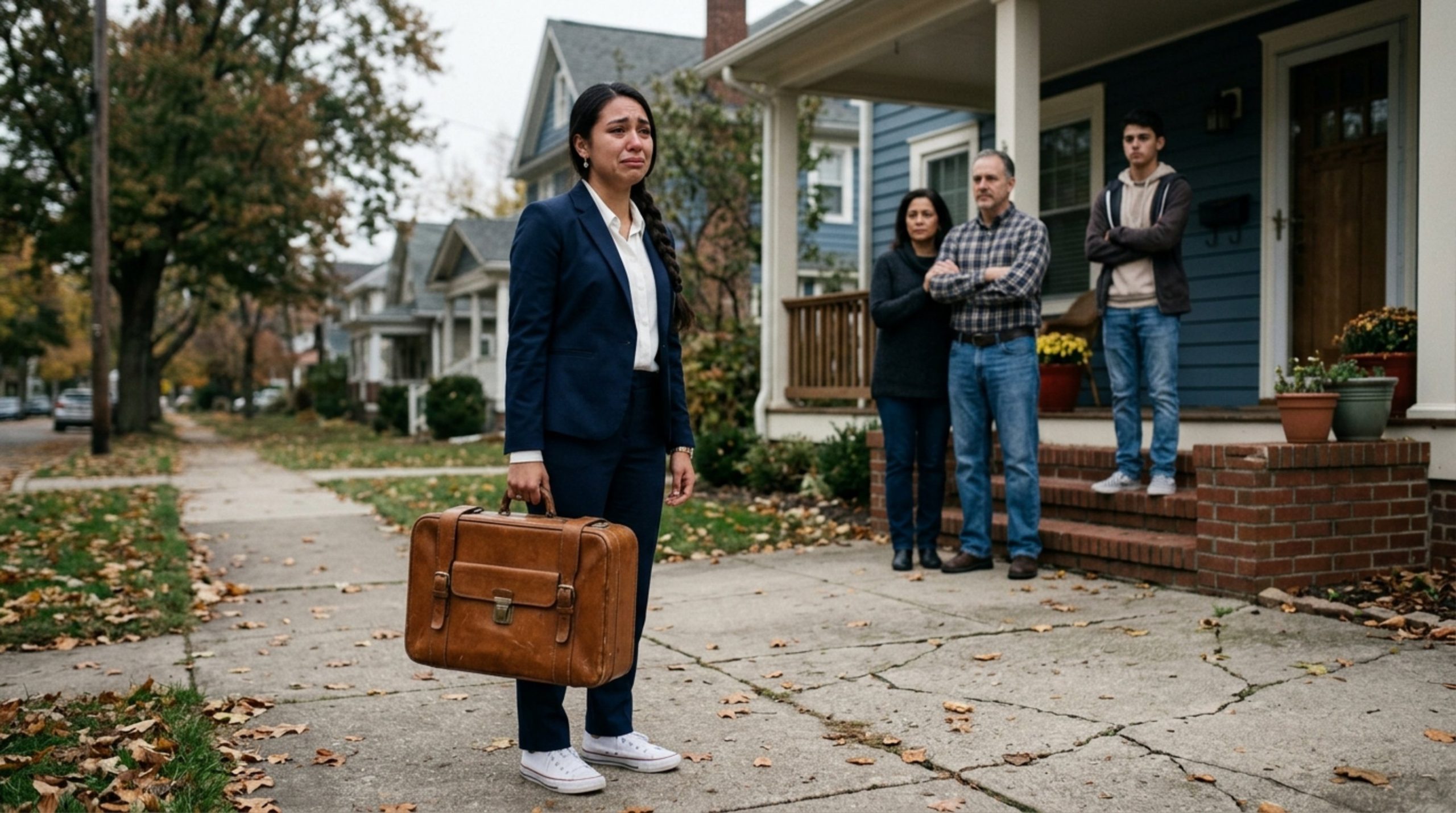
Ryan grabbed my suitcase, yanked the front door open, and shoved the luggage out onto the porch. A blast of icy March air rushed inside, sharp enough to sting my lungs.
“You can leave now,” he said flatly. “And don’t even think about crawling back.”
Behind him, my parents actually laughed.
What none of them realized—what hadn’t even crossed their minds—was that the account Ryan had drained wasn’t simply a checking account I could spend however I pleased.
Most of that money had been deposited after my Aunt Laura’s death into a court-monitored arrangement. Every withdrawal, every transfer, every unusual movement was flagged and reviewed.
And by the time Ryan tossed me out of the house, the bank’s fraud department had already started calling.
I spent that first night in my car, parked behind a twenty-four-hour grocery store. A flickering security light buzzed overhead. My suitcase lay on the back seat, half unzipped. My heart thudded so hard in my chest I thought I might actually pass out.
At 11:17 p.m., my phone rang again from an unfamiliar number—the third attempt that evening. This time, I answered.
“Miss Emily Bennett?” a woman asked.
“Yes.”
“This is Megan from Fifth River Bank’s fraud prevention division. We’ve detected unusual activity on your account and have been trying to reach you. Did you authorize cash withdrawals totaling twenty-nine thousand dollars today, along with an $8,400 transfer?”
“No,” I said instantly. “My brother stole my debit card.”
Her tone sharpened. “Do you currently have the card in your possession?”
“Yes. I took it back.”
“All right. We’re freezing the account immediately. Given the volume and pattern of these transactions, the matter has already been escalated for internal review. One more question: are you aware of the source of the funds in your savings account?”
I closed my eyes.
“Yes,” I replied quietly. “It’s restricted compensation money that was placed there after my aunt’s wrongful death settlement.”
There was a brief pause on the line.
“I understand,” Megan said carefully. “In that case, you’ll need to come into a branch first thing tomorrow morning. Bring identification and any documentation related to the settlement.
If these withdrawals were made by an unauthorized individual, this may involve both law enforcement and probate court proceedings.”
I thanked her and ended the call, then remained motionless in the driver’s seat, staring through the windshield at the empty loading dock.
Three years earlier, Aunt Laura had been killed in a trucking accident outside Dayton. She had no spouse and no children. To everyone’s surprise, she named me as the beneficiary of a modest private fund created from part of the settlement.
Not because I was her favorite.
But because I was the one who drove her to chemotherapy. I handled her paperwork. I stayed in the hospital room when others found excuses to be somewhere else.
The fund wasn’t enormous. After attorney fees and taxes, it came to just under forty thousand dollars.
Still, it was enough to cover my master’s degree if I managed it carefully. The money was placed in an account under my name, but it came with strict reporting requirements and spending limitations. I could use it for tuition, housing, textbooks, transportation, and documented living expenses.
Large or irregular transactions automatically triggered scrutiny.
Ryan and my parents knew Aunt Laura had left me “something.” What they never bothered to understand was how that account actually worked.
They simply assumed that if money carried my name, it was money they could squeeze out of me whenever they felt entitled to it.