
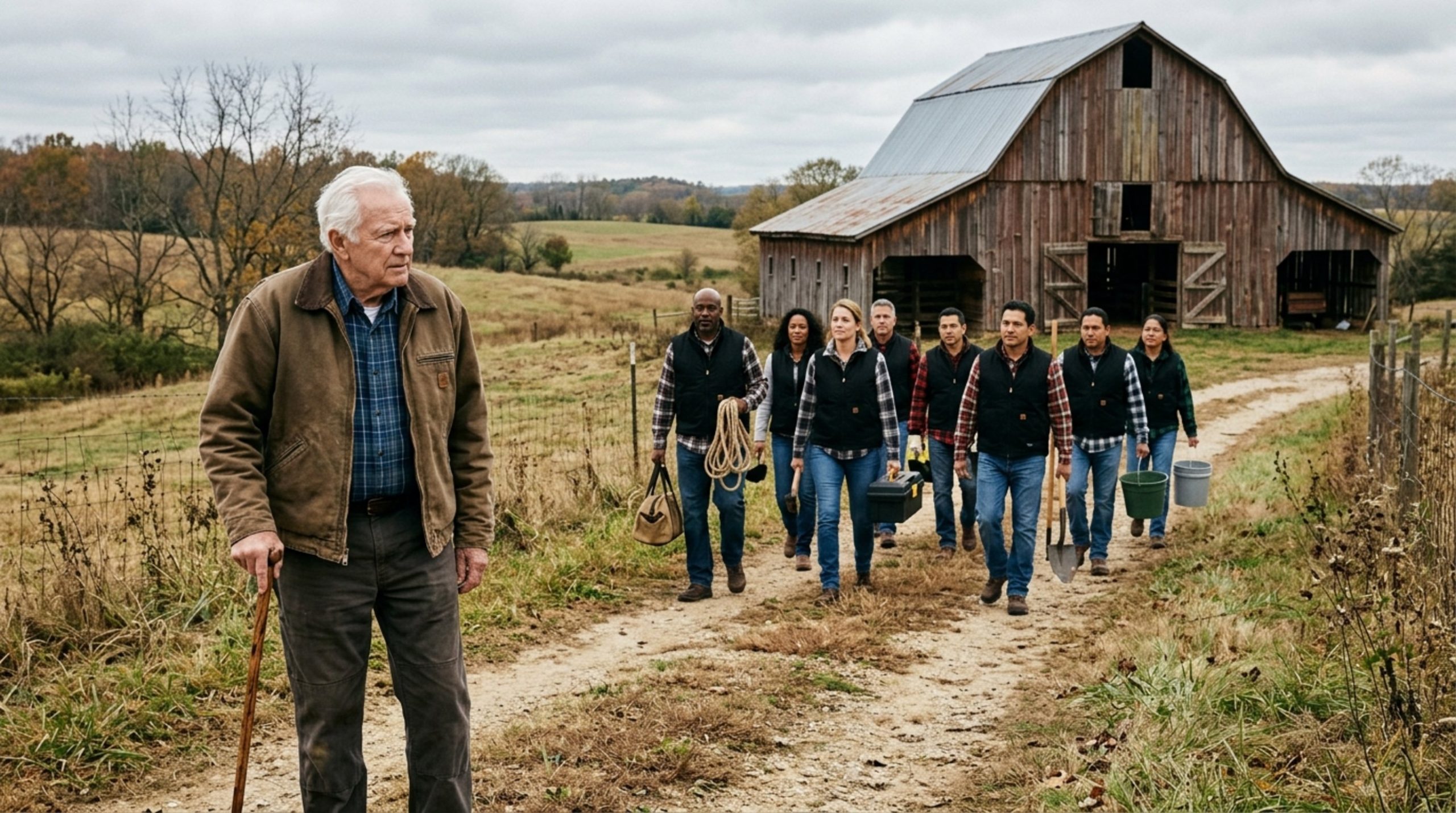
The Last Twenty Dollars on Willow Street
By the end of November, a biting chill had settled over Millhaven, Ohio, seeping through cracked windowpanes and the gaps around aging doorframes until it felt as though the cold had lodged itself deep inside people’s bones.
On Willow Street, eighty-year-old Walter sat outside Mason’s Grill. One gloved hand pressed against the inside pocket of his coat, guarding a single folded twenty-dollar bill — the last of his money until his pension check arrived.
He understood exactly what that meant. It meant stretching canned soup for a week, skipping meals whenever possible, pretending the dull ache of hunger was something he could ignore.
He had endured harsher seasons before — layoffs that came without warning, endless hours in hospital waiting rooms, the death of his wife, Emily, and the bitter lesson that some people only stay close while there is something to gain.
As he debated whether to spend the money on groceries that evening or force himself to wait until morning, his attention shifted to a biker standing just beyond the restaurant window.
The man was broad-shouldered, dressed in worn leather, his face roughened by wind and years on the road. His features were hard, the kind that made strangers instinctively look away.
But Walter noticed something else. Not menace — hunger. The biker stared at the plates being carried past the window, then quickly looked off, as if ashamed to have been caught. Pride kept his back straight, even as exhaustion seemed to weigh him down.
Walter recognized that expression. He had seen it long ago in his own reflection. He had seen it in Emily’s eyes when the bills had stacked too high on the kitchen table.
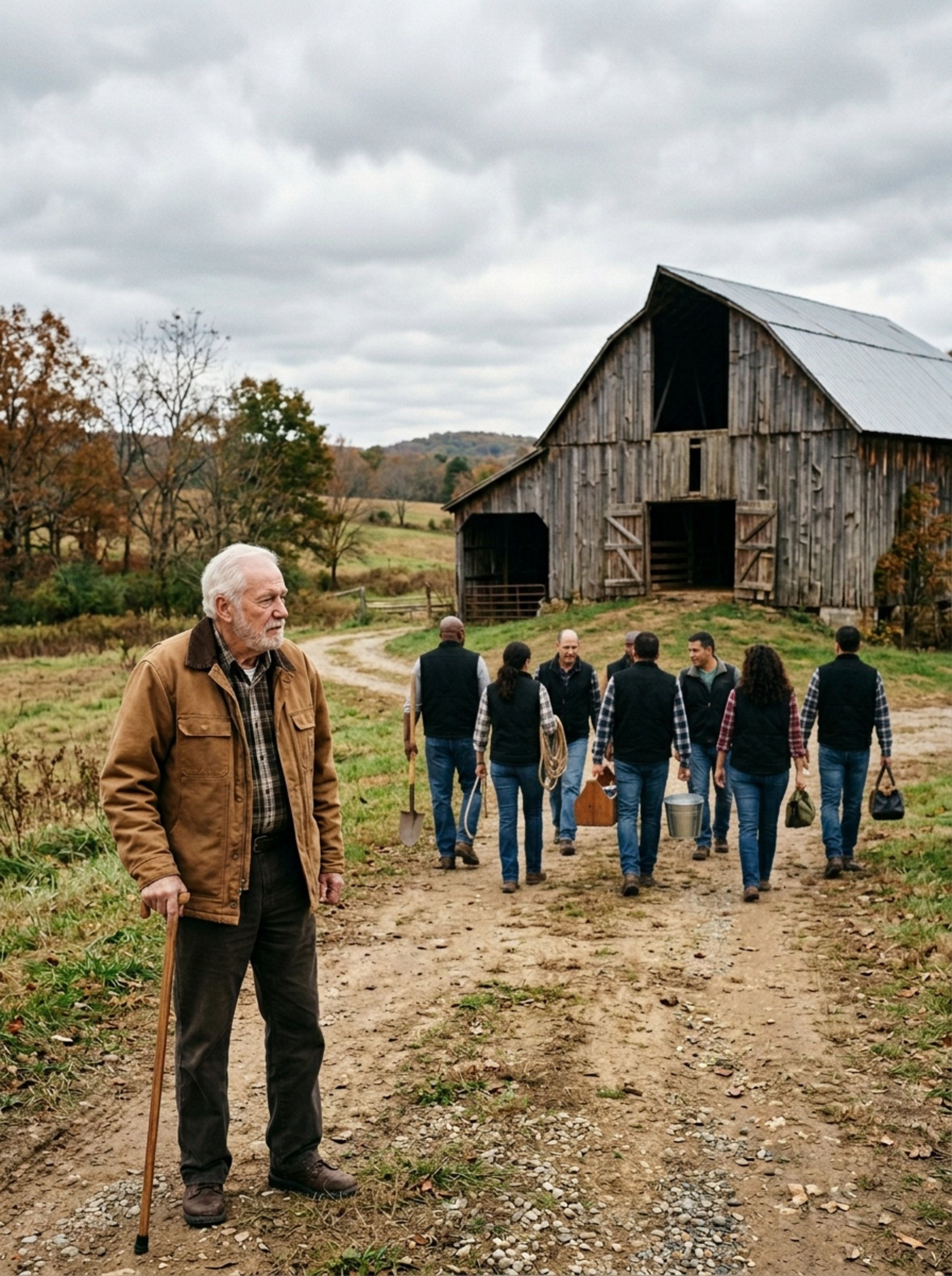
Slowly, leaning on his cane, Walter rose and crossed the sidewalk toward him. The tip of the cane tapped softly against the concrete. Without ceremony, he held out the folded twenty.
“It seems to me you could use this more than I can,” Walter said quietly.
The biker blinked, stunned. “Sir, I can’t take that.”
“Yes, you can,” Walter replied evenly. “I know the difference between someone passing time and someone standing still because his stomach’s empty.”
For a brief moment, the cold, the street, and the noise of passing cars seemed to fade, leaving only the two men facing each other on Willow Street.