
Be Yourself
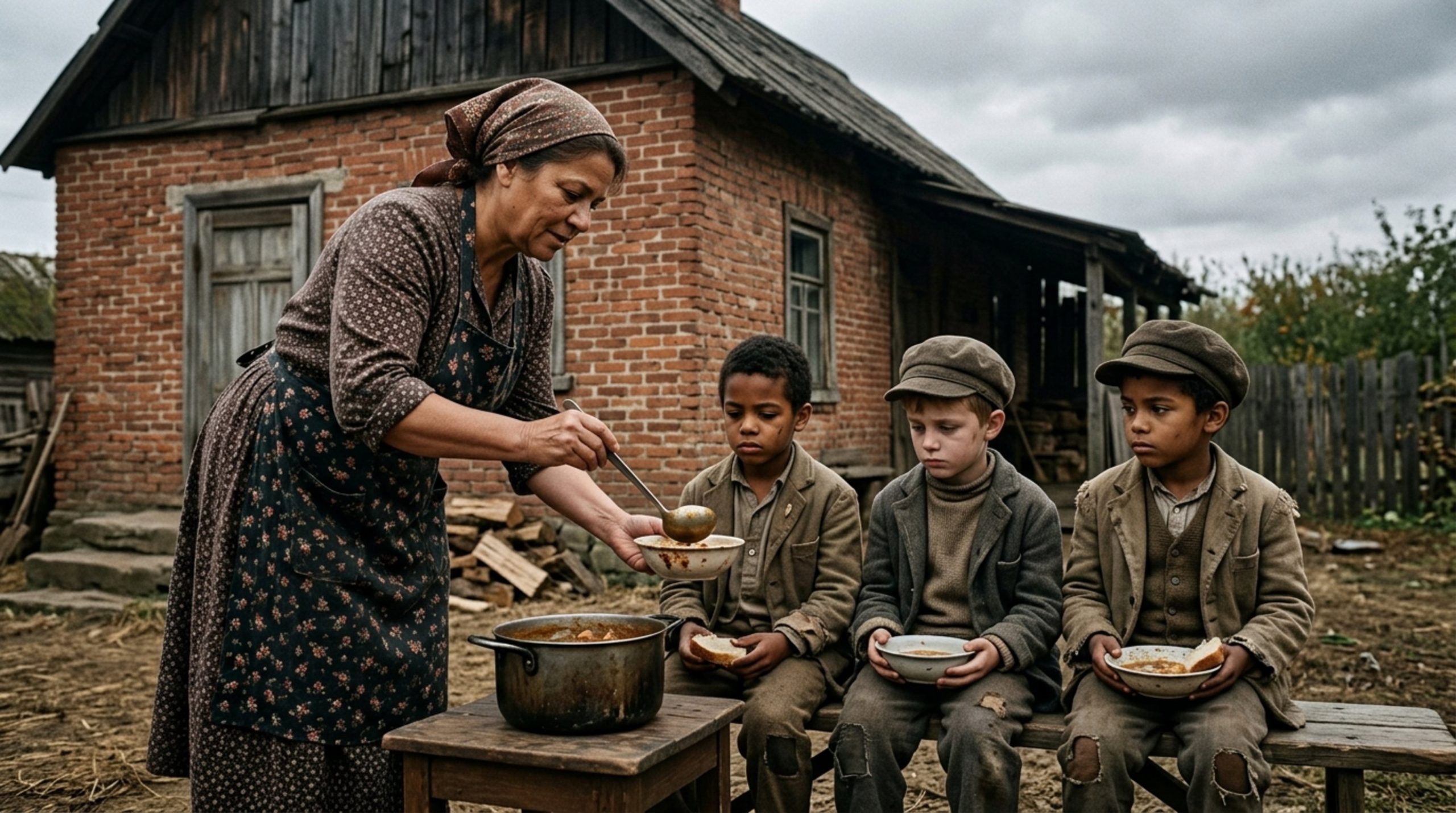
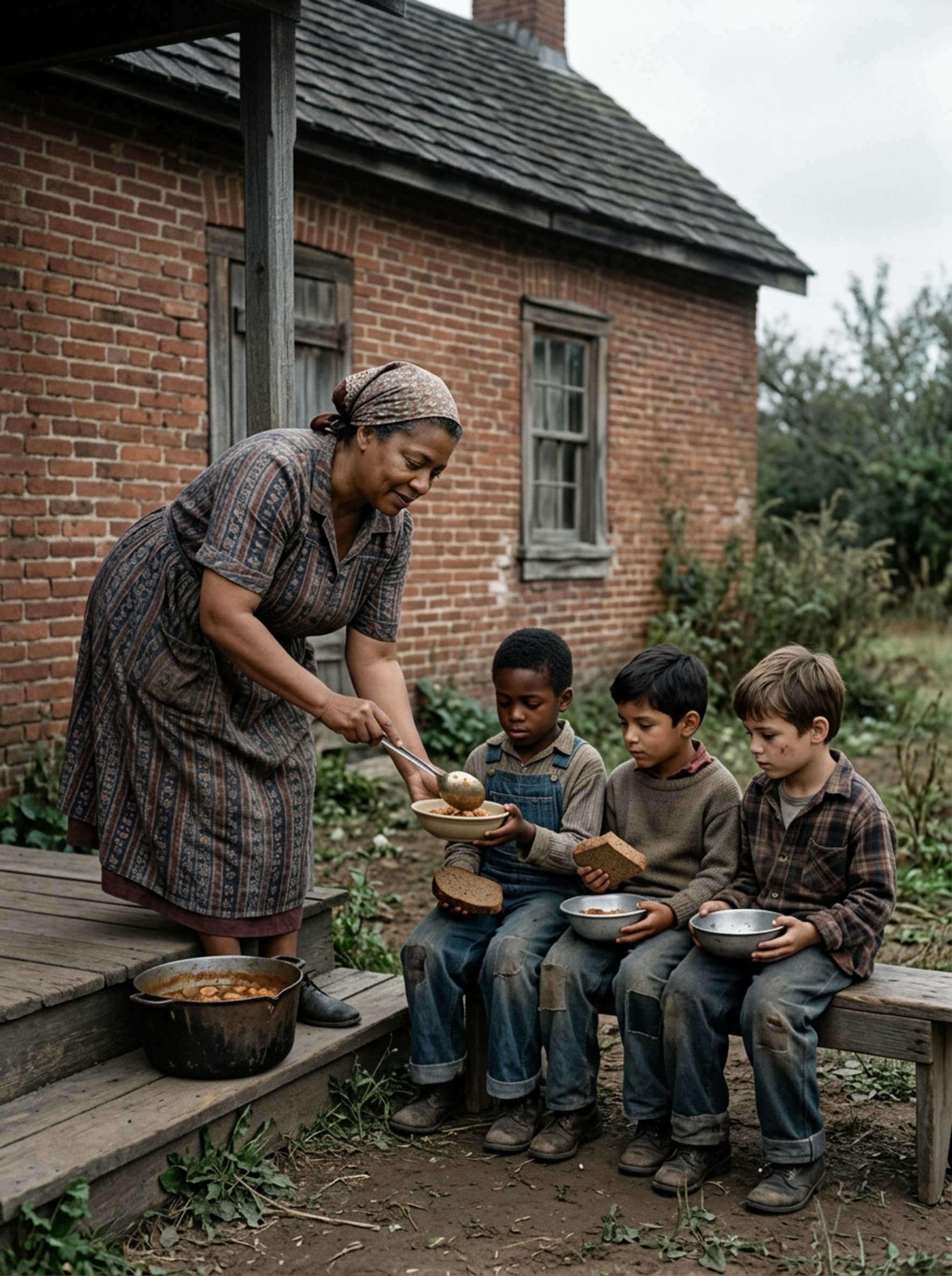
An elderly woman once fed three homeless children, never imagining that this simple act would reshape her life years later. Steam drifted lazily from a large pot, blending with the rich scent of broth and the warm sweetness of freshly made pancakes. Linda’s street stand was modest, yet everything about it spoke of care and order.
An old metal cart supported the setup, its canopy faded by sun and rain. Oil crackled in a well‑worn skillet. Small jars of sauces stood in a neat row like disciplined little soldiers. Around her swirled the constant soundtrack of the city—engines passing, hurried footsteps striking pavement, a distant horn, fragments of conversation crossing paths without anyone truly listening. Linda’s hands revealed a lifetime of labor: dotted with tiny burn marks, nails worn down by work that never really ended.
She adjusted her stained apron and handed a plate to a customer who had been coming to her for years.
“God bless you, Linda!” the man said, dropping a few coins into her hand.
She answered with a faint smile—not the radiant kind, but the brief, restrained curve of the lips of someone who has no time to linger in joy.
“Eat well, son,” she replied gently.
When he left, Linda glanced at the small tin where she kept her change. It was never full. That evening it felt lighter than usual. Construction on the corner had diverted foot traffic, and a new competitor with a flashier stand had set up two blocks away, drawing away what little business there was.
Still, Linda carried on. She always did.
It was nearing six o’clock when the sun dipped lower and the shadow from her canopy stretched long across the sidewalk. That was when she noticed them—three children. They weren’t running like the others, nor were they laughing or shouting. They moved quietly, huddled close together as if the world were too vast and unforgiving to face alone. Their faces were strikingly alike: dark eyes and prominent cheekbones.
Their noses were sharp, their black hair tangled and uncombed, as though no one had run a brush through it in days. They looked like dusty reflections of one another. Their clothes hung off their thin frames, worn and several sizes too big, and their sneakers had long since lost their shape.
No backpacks. No parents in sight. Just hunger.
Linda regarded them steadily, without theatrical shock. She didn’t clutch her chest or gasp in horror. She simply looked at them the way a person looks at something painful because it is undeniably real.
The children stopped a few feet from her stand, unsure whether they were allowed any closer. The boy in the middle gathered his courage, stepped forward, and spoke in a low voice.
“Ma’am… do you have anything you won’t be able to sell?”
Linda paused, her spoon suspended in midair. She had heard that question before—years ago, from other children, in other summers. Yet there was something different about these three. There was no cunning in their eyes, no rehearsed tone. They were asking with embarrassment, not strategy.
“Do you have a mother?” she asked gently, without accusation.
The three exchanged glances, as if the question itself had struck them.
“No,” the middle boy answered. His voice trembled only slightly. “We don’t have anyone.”
Linda swallowed hard. Her gaze drifted to the pot, then to the filled plates waiting for customers, then to the small box of change beside her. After a moment, she looked back at the children. The one on the right stared at the ground. The one on the left pressed his lips together, fighting tears.
She drew in a slow breath and made a decision that didn’t feel heroic. It felt obvious.
“Come here,” she said, motioning with her hand. “Go on. I’m not going to bite.”
They approached cautiously, as if expecting the invitation to vanish. From what remained, Linda spooned out three modest portions. Not the generous servings she gave grown men after a long shift—but the food was hot. And warmth, when you’re hungry, is more than just a meal—it’s a promise.
The boys perched on the plastic stools, shoulders touching, as if they could borrow warmth from one another. At first they ate in frantic silence, spoons moving quickly, afraid the food might disappear. Gradually their pace slowed. It was as though their bodies had finally accepted that something real had reached their stomachs—and that it would stay there.
Linda watched them, an unexpected tightness swelling in her chest. She couldn’t quite name its source. Perhaps it was the memory of her own son when he had been small. Perhaps it was the weight of long years spent standing behind this counter. Or maybe it was the bitter, unbearable truth that no one should ever have to see three children eat as if it were their final chance.
“What are your names?” she asked gently, willing her voice to remain steady.
The boys exchanged wary glances again.
“Matthew,” said the first.
“I’m Glen,” murmured the one in the middle.
“And I’m Dennis,” added the third.
Linda repeated the names silently, committing them to memory the way one safeguards something fragile and irreplaceable.
“Where do you sleep at night?” she asked.
All three lowered their eyes.
“Wherever we can,” Glen whispered.
Her fingers tightened around the ladle. She looked up. People passed by, buying their lunches, chatting, never once turning their heads. A couple crossed the street laughing, oblivious. A well-dressed man paused, glanced at the boys, and grimaced as though hunger were contagious. A sharp flicker of anger pricked beneath Linda’s ribs.
Then a voice sounded behind her—hard, flat, cold as concrete.
“Linda, handing out food again?”
She turned. Victor stood there, a local man who carried himself as though the block belonged to him. The same one who liked to brag about knowing the officials who issued permits.
“Don’t come complaining when you’re short on cash,” he added, eyeing the children as if they were debris cluttering the sidewalk.
The triplets froze. One clutched the rim of his plate; another ducked his head. Linda straightened her back despite the dull ache running along her spine, and faced him without lowering her gaze.
Her back throbbed, but she refused to let the pain show.
“If you’re finished,” Linda said evenly, brushing an invisible speck of dust from the table, “let us get back to dinner.”
Victor gave a short, humorless laugh. “Dinner? You call this dinner? You’d be better off finding real work instead of playing café on the sidewalk.”
Color rose in Dennis’s face. Matthew’s fingers tightened into fists beneath the table. Glen stared straight ahead, blinking too quickly. Linda noticed everything, even as she kept her eyes fixed on Victor.
“This is real work,” she replied, her voice calm but firm. “We earn every dollar honestly. That’s more than enough for us.”
He stepped closer, lowering his voice as though sharing a secret. “Pride won’t pay the bills. When this little hobby collapses, don’t expect sympathy.”
Linda slowly stood. The movement sent a sharp ache through her spine, yet she remained upright. She was not tall, but in that moment she seemed unmovable.
“We’re not asking you for anything,” she said. “Not advice. Not money. Not permission.”
A few passersby had begun to slow, sensing the tension. Victor glanced around, clearly irritated by the attention. His smirk faded.
“You’ll regret this stubbornness,” he muttered.
“Maybe,” Linda answered softly. “But my children will remember that we didn’t bow our heads.”
For a second, neither of them spoke. Then Victor clicked his tongue and stepped back. “Suit yourself.”
He turned and walked away, shoulders stiff.
Only when he disappeared around the corner did Linda allow herself to exhale. The boys looked up at her.
“Eat,” she said gently, managing a small smile. “Our food’s getting cold.”