
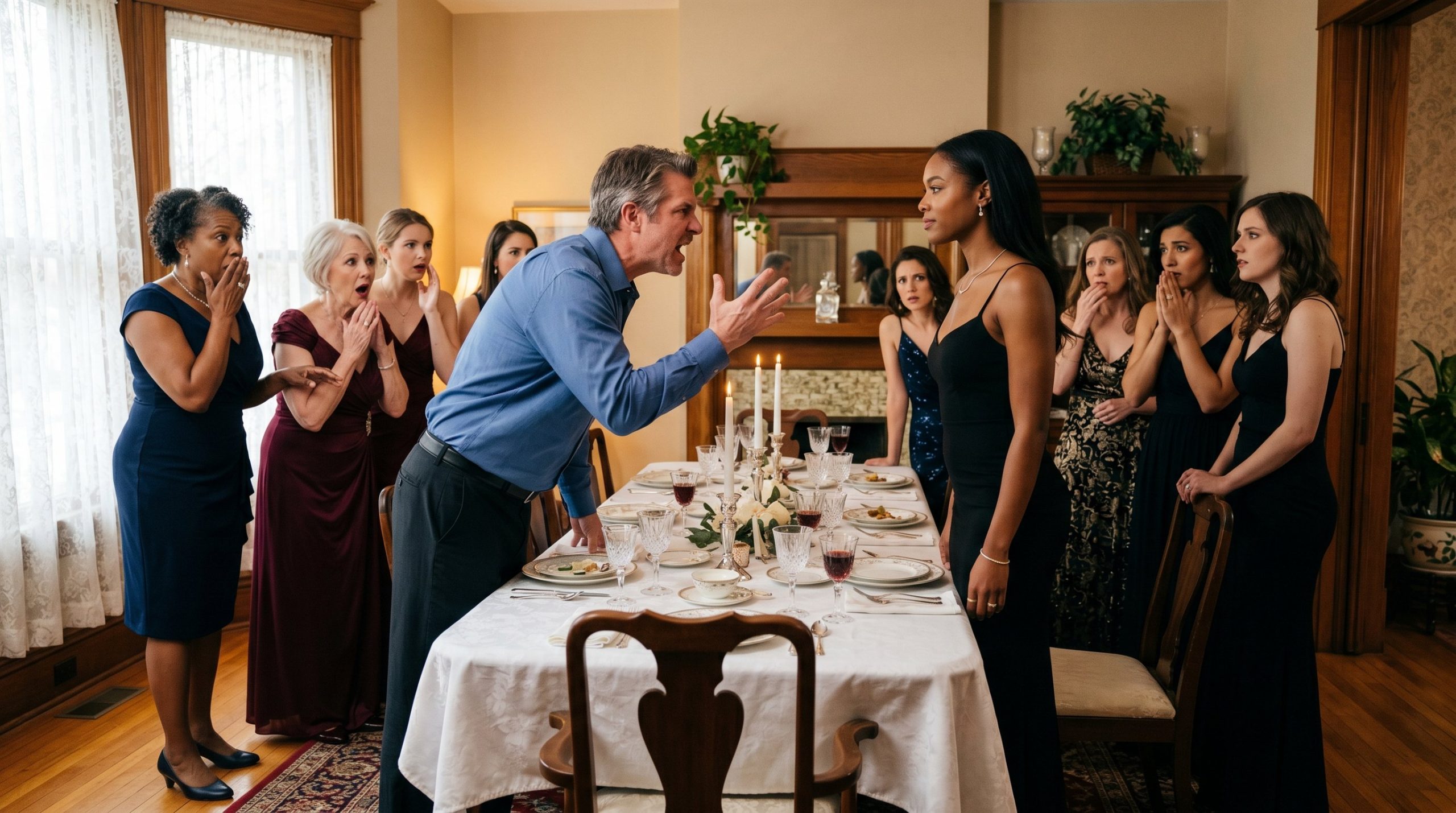
They all said the same thing: she had done the right thing.
A week later, Megan came back from the grocery store and said she had run into Michael. He had been standing there with a cart piled high with frozen dumplings and ready-made meals. His clothes looked rumpled, and his eyes were red.
“I asked how he was doing,” Megan told her. “He muttered that his mother really is sick now, that she can’t do anything. So he has to cook, clean, and work too. They hired someone for a couple of hours a day, but it costs too much. He’s already sold the car. He quit going fishing. He doesn’t have time for anything anymore.”
Anna listened without speaking. There was no satisfaction in her, no pity either. Only a quiet, weightless sense of relief.
“He asked where you were,” Megan added. “He told me to say that if you come back, everything will be different.”
“It won’t be,” Anna said, shaking her head. “Now he simply understands what my work was worth.”
Another week passed before Anna rented a small room in a shared apartment near the school. Ten square meters, a communal kitchen, a window facing the courtyard where pigeons cooed on the pavement. Nothing impressive. Nothing beautiful.
But it was hers.
She sat on the bed and looked around at the bare walls. Her suitcase stood on the floor with the few things she had taken. That was all.
Her phone buzzed.
An unknown number.
Anna, this is Linda. Forgive me. I didn’t understand what I was doing. Come back. I’ll change.
Anna read the message once. Then she deleted it and set the phone on the windowsill.
Outside, an old woman scattered crumbs from her palm, and the pigeons rushed in, shoving, fluttering, murmuring. It was noisy. It was alive. The room smelled of fall, wet asphalt, and other people’s dinners drifting in from the shared kitchen. It did not smell like Linda’s perfume or her endless migraines. It did not smell like Michael, who had never learned how to truly see her.
Anna pushed the window open wider. Cold air struck her face. She breathed it in deeply, filling her lungs all the way.
That night, for the first time in seven months, she went to bed at eight simply because she wanted to. Not because she had collapsed from exhaustion, but because she could choose to. No one would wake her up demanding that shirts be ironed. No one would tell her she was not trying hard enough. No one would turn her patience into something they could use against her.
In the morning, sunlight woke her. It was Saturday. She did not have to get up. She could sleep more, go for a walk, or stay under the blanket and stare at the ceiling. Every option belonged to her.
In the kitchen, her neighbor Patricia, a woman in her fifties, was boiling water.
“Tea?”
“Thank you.”
They sat together in silence. Beyond the window were pigeons, passing cars, and someone arguing out in the courtyard. An ordinary morning. Not familiar yet. But hers.
Anna finished her tea and rinsed the mug. In the dark glass of the window, she caught her reflection: pale face, no makeup, hair sticking out in soft, messy strands. Ordinary. Free. Alive.
She smiled.