
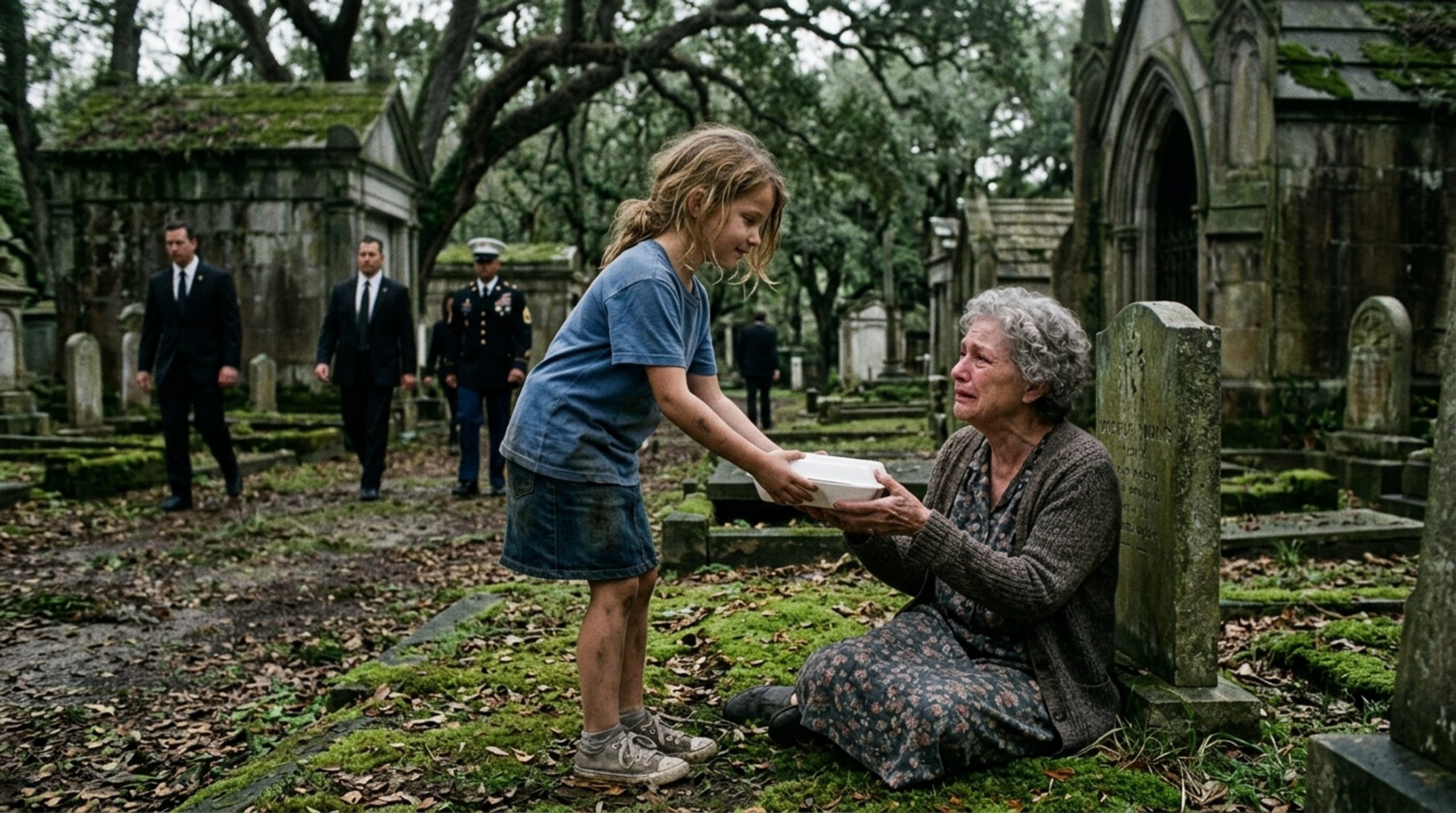
Every day, a homeless little girl split the only meal she had with an elderly woman—until one afternoon, security guards and a millionaire turned everything upside down.
In Savannah, Georgia, where Spanish moss hangs sleepily from ancient oaks and tourists wander past historic houses with iced coffee in their hands, there lived a child who did not roam the streets for pleasure or sightseeing.
She walked because habit had taught her to.
Because survival demanded it.
Because loyalty pulled her along.
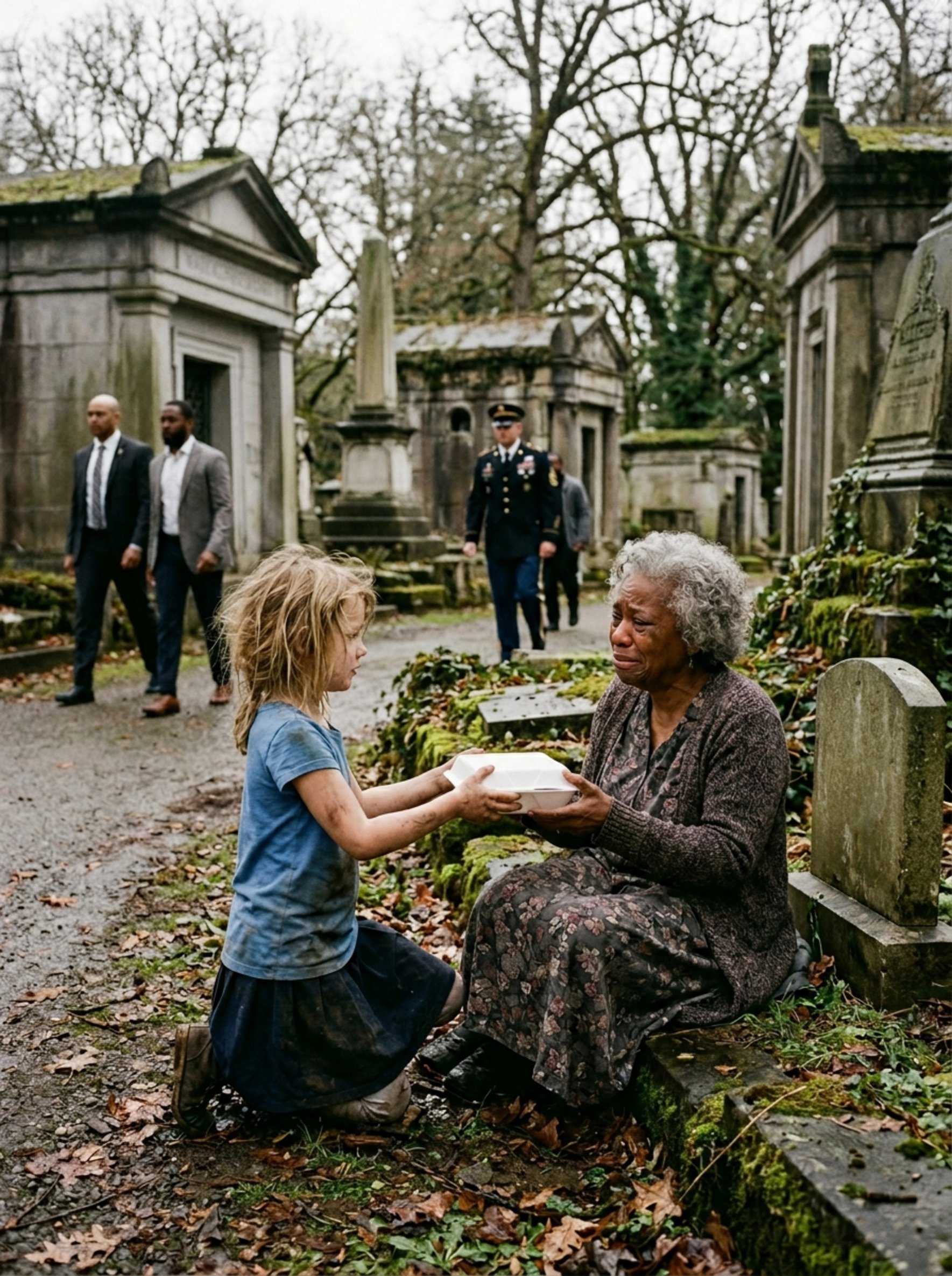
Her name was Emily. She was ten years old, and she owned none of the things people usually picture when they hear the words “family home.”
No father.
No mother.
No bedroom.
No bed.
What she did have was a gray sweater with two holes worn through the sleeves, a frayed backpack, and a quiet kind of courage she never thought to brag about. To Emily, bravery was not something grand. It was simply part of breathing through another day.
After her mother died months earlier, Emily slept wherever the city allowed her to disappear. Some nights she curled beneath the awning of a closed shop. Other nights she rested on a park bench. Sometimes she slipped into the entryway of an apartment building—unless the night doorman chased her out after seeing the look in her eyes, the silent plea that said, please.
When rain came, she used it to wash.
She taught herself to braid her hair a little crookedly so it would not knot so badly.
She learned how to count coins.
She learned to stay silent when grown-ups shouted.
And she learned to run whenever a grown-up smiled too much.
Each afternoon, at exactly five o’clock, Emily followed the same small ritual.
She made her way to St. Jude Community Kitchen, a plain brick building that smelled of beans, bleach, and stubborn hope. Local volunteers handed out one hot meal a day in white foam containers. Sometimes it was rice and soup. Sometimes, when donations had been generous, there was chicken.
Emily never asked for more than one serving.
Just one.
The only meal she could count on for the entire day.
And still, every single day—
she divided it in half.
Holding the warm container against her chest as if it were something precious, she crossed two streets, then the main road, then a narrow bridge, before climbing the dirt path toward Oak Hill Cemetery. The iron gate gave a mournful creak when she pushed it open, and beyond it the world seemed to hush. Cypress trees stood like sentries. Old gravestones leaned with fading names. Artificial flowers mingled with fresh ones, all carrying the same heavy, muted scent of grief.
And there, always in the very same place, on a cracked concrete bench before a plain grave, Emily would find the person she had come to see.