
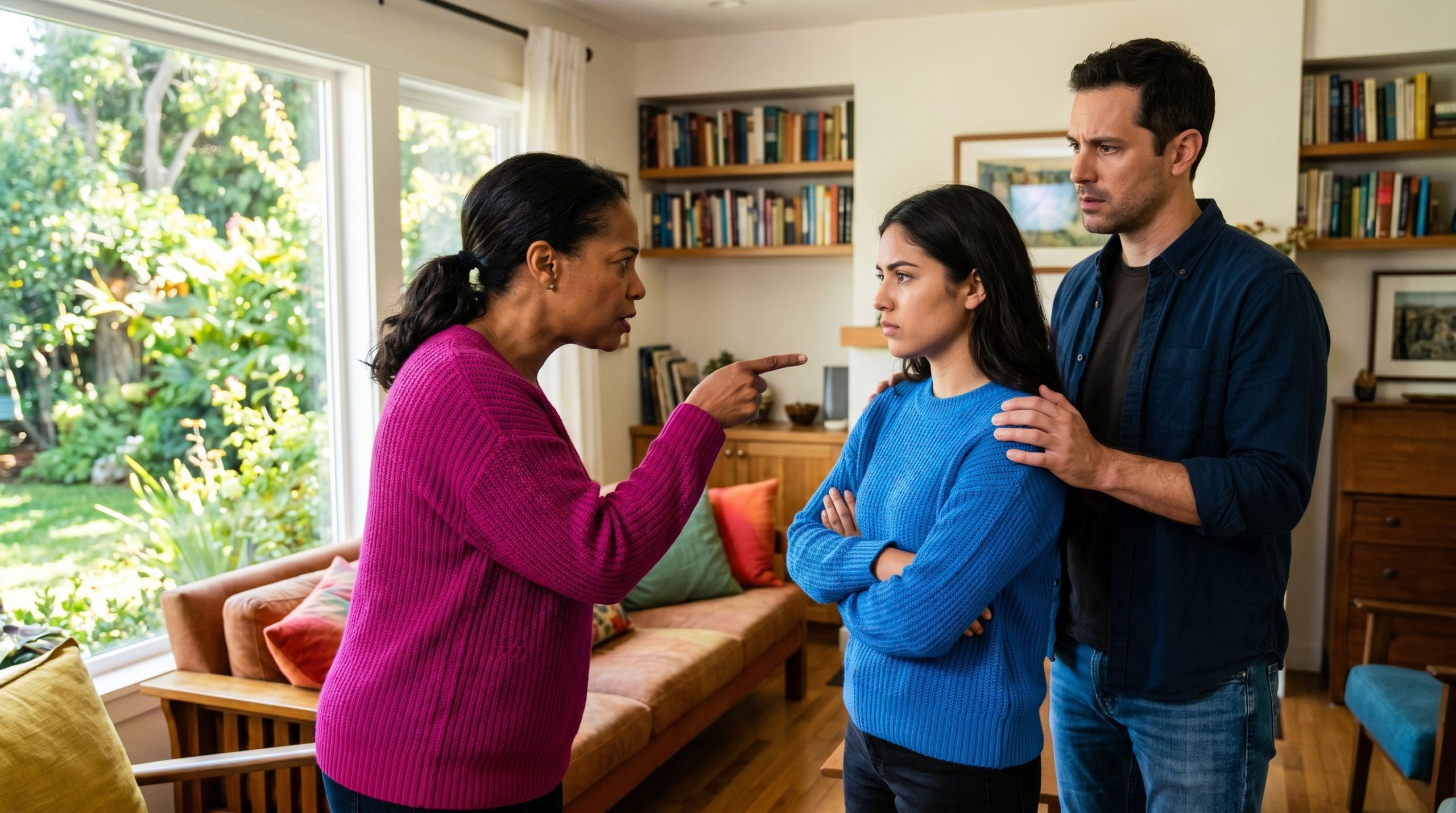
“Clear out the country house. My relatives are moving in there,” her mother-in-law announced.
For a moment, Tara did not even realize the words were meant for her. She was standing beside the outdoor washstand, shaking water from her hands after working in the greenhouse, her eyes absently fixed on the garden beds where the first green shoots had already broken through. The wind pushed dry pollen across the yard, rocked the old apple tree near the fence, and from the shed came the irritated fluttering of chickens bumping against their perch after she had let them out to roam.
The morning had begun peacefully. Tara had driven out to the country alone for the weekend, the way she did every spring and almost all summer. The house needed opening up after the workweek: the stove checked, dust wiped away, the bathhouse inspected, the yard swept, the plot walked over. She liked those chores. Nothing here felt borrowed, rented, or temporary. The house had come to her from Paula, her father’s older sister. Paula had lived in the country her entire life, keeping everyone at a distance, and when her strength finally failed, she had called for Tara. Not her in-laws, not some distant cousins, not the neighbors—Tara. It had taken six months to settle the inheritance, and then another year to make the place livable again: patching the roof, replacing rotten boards in the shed, clearing the storage room, and bringing the neglected garden back to life.
Tara had grown attached to the house in the way people cling not to walls, but to memory. In the kitchen, the narrow wooden cupboard where Paula used to keep grains still stood in its old place. In the room beneath the window hung embroidered cloths—not for decoration, but because Paula had stitched them herself and had been proud of every one. On the veranda, the bench still creaked, the same bench Tara’s father had once repaired in a single evening while he was still alive. None of it was worth much money, but it carried a value impossible to explain to someone who came measuring the yard in strides and mentally deciding where to put someone else’s cabinet.
About an hour and a half after Tara arrived, a car stopped at the gate. She was not especially surprised when her mother-in-law, Linda, climbed out first, followed by Tara’s husband, Mark. What did surprise her was that they had not called ahead.

“We decided to come see you,” Linda said brightly, as if she had arrived not at another person’s home, but at her own vacation place. “Mark told me you were here.”
Tara only nodded. What was there to say? She did not want to invite them in, but she also had no intention of starting a scene at the gate. Mark greeted her quietly, immediately looked away, and reached into the trunk for a bag.
“Mom brought pies…” he began, then stopped short when he caught his wife’s look.
“Cutlets and lightly salted cucumbers,” Linda corrected, unfazed. “You can’t be expected to live out here on dry rations.”
Tara let them inside. At that point, the visit still seemed unpleasant, but ordinary. Linda had always enjoyed showing up without an invitation. She liked inspecting how other people lived. She liked offering advice exactly where no one had asked for it. Yet that day there was something different in her manner—too purposeful, too assured.
They did not go straight to the kitchen the way guests usually do. Linda wandered slowly around the yard, paused near the shed, peeked into the bathhouse, and tapped her knuckles against the fresh board on the porch. Mark trailed behind her in silence.
“Solid work,” Linda observed. “Not falling apart.”
“Was it supposed to?” Tara asked dryly.
“I’m just saying. A lot of country houses are leaning sideways by now, but this one is still sturdy. And the location is good. The store is close. The bus runs through. There’s water. The stove works. Comfortable enough to live in.”
Tara straightened, rested her palm against a veranda post, and looked at her husband. He pretended to be studying the bathhouse roof.
“You replaced the shed roof?” he asked, as though they had come only to discuss household repairs.
“I did. Last fall.”
“You shouldn’t be dragging everything on yourself,” Linda put in. “You should have said something sooner. There’s a man in the family.”
Tara gave a short, humorless laugh. Coming from Linda, that sentence sounded especially rich. Over the entire previous season, Mark had come out here twice. Once to grill meat, and once because Tara needed paint and tools brought from the city. Both times, the property interested him far less than his phone and the chance to leave as early as possible.
While Tara poured compote into mugs, Linda had already stepped into the house. She did not take off her shoes at the threshold; she merely slowed for a second, as if remembering where everything was, though she had been here only a couple of times before. She looked into the large room, then into the smaller one with the narrow bed and old dresser, and finally pulled open the pantry door.
“Spacious,” she said quietly, but loudly enough for everyone to hear. “Very spacious, actually. And the air is completely different here. Children would do well in a place like this.”
Tara slowly set down the knife she had been using to slice bread. That was the moment everything inside her tightened into a hard, alert knot. It was not fear. It was not confusion. It was something else—a sudden, clear understanding that the conversation would not be about the greenhouse, or the bathhouse, or how easy it was to breathe in the country.
Mark sat down on a stool and stared at the tabletop.
“What children?” Tara asked, making an effort to keep her voice even.
“Oh, there are people who could use it,” Linda replied evasively, running her fingers along the windowsill. “A table could go here. Beds over there. And in summer, the veranda would be perfect.”
Tara was no longer listening to talk of tables. She was watching her husband. She wanted him to lift his head and say plainly, just once, what was going on. But Mark remained silent, as if he had been brought there by accident and understood nothing himself.
Linda returned to the kitchen, sat opposite Tara, and folded her hands on the table with the air of someone about to deliver something important and final.
That was when she said it.
“Clear out the country house. My relatives are moving in there.”
After those words, the kitchen became so quiet that Tara could hear the gate creak outside in the wind. For several seconds, she looked at Linda without blinking. She did not jump up. She did not shout. She did not slam her palm on the table. She simply sat there, saying nothing. Linda seemed to mistake that silence for bewilderment.