
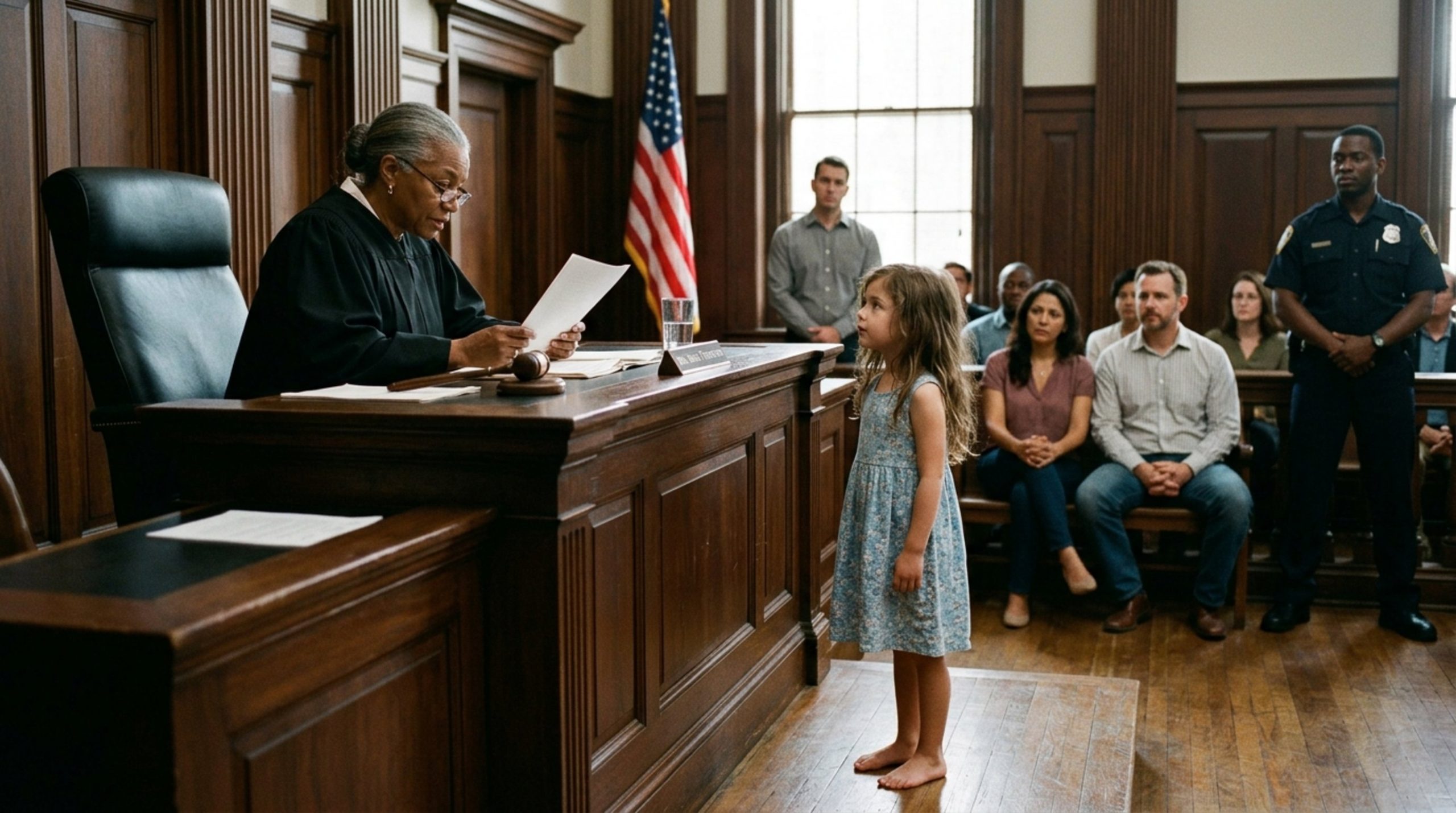
Though his employment was dependable, the paycheck never stretched far. After insurance premiums and rent devoured most of what he earned, there was little left to breathe with. Jason had been raising Lily on his own ever since his wife, Sarah, passed away years earlier following a sudden medical emergency. Grief had not granted him time to adjust. He had learned to braid hair and pack school lunches in the dim blue hour before sunrise while still carrying the weight of loss in his chest.
Lily was six, small for her age, and burdened with a stubborn respiratory condition that turned every winter into a season of vigilance. Cold months meant walking a thin line between ordinary childhood and constant watchfulness. Some nights she would jolt awake, clutching at her chest, dragging in shallow, uneven breaths that seemed to scrape on the way down. On those occasions, Jason sat beside her bed and silently counted the seconds between each inhale, as though sheer focus might steady the rhythm of her lungs.
During the worst spells, he pressed a warm cloth to her forehead and murmured, “I’m right here, Lily-bug. Breathe with me,” over and over until her rigid shoulders softened and the medication finally began to ease the constriction.
The inhalers and nebulizer treatments that kept her stable were painfully expensive. In December, after a particularly severe flare-up forced the doctor to adjust her dosage, the new prescription cost so much that Jason stood at the pharmacy counter staring at the receipt for a long time before folding it carefully and sliding it into his wallet. The number printed at the bottom felt unreal.
He began volunteering for extra shifts—overnight inventory counts, weekend delivery runs, anything available. His supervisor appreciated his reliability, but company policy was rigid when it came to payroll advances.
By mid-January, Jason had sold his old fishing boat. Not long after that, the spare television in the living room went. Finally, he parted with a silver bracelet that had once belonged to Sarah. Each sacrifice bought only a few more weeks—another utility bill paid, another refill secured.
The morning everything tilted
One Tuesday, frost silvered the patch of grass in front of the duplex. Lily woke flushed and trembling, heat radiating from her small body like an overheated furnace. The moment Jason pressed his palm to her cheek, he felt the fever. When she tried to sit up, her breath snagged halfway in.
“Daddy,” she rasped, her voice thin and strained, “it’s tight again.”
He reached for the inhaler—and felt his stomach drop. It was nearly empty. After two weak puffs, the canister sputtered uselessly, offering almost no relief.
Jason grabbed his phone and checked his bank balance. Less than twenty dollars remained. The rest of his last paycheck had already been allocated to rent and the electric bill.
In a moment that would replay in his mind countless times afterward, he called his supervisor, Michael, and explained the situation in clipped, uneven sentences.
“Michael, I wouldn’t ask if it wasn’t serious,” he said, forcing calm into his voice. “I just need a small advance so I can fill her prescription today.”
There was a pause on the other end—then a heavy sigh.
“Jason, you know I would if I could,” Michael replied. “But payroll’s already closed. If I make an exception for you, I have to make one for everyone.”
The call ended. Jason sat on the edge of Lily’s bed, watching the uneven rise and fall beneath the blanket. The weight of responsibility pressed down so heavily that the room itself seemed to shrink.
That evening, after Lily drifted into a light, restless sleep, he put on his winter coat and stood for a long time in the narrow hallway. His hand rested on the doorknob as if it marked a boundary between the man he believed himself to be and someone else entirely.
The pharmacy on Brookline Avenue
The pharmacy on Brookline Avenue blazed with sterile white light against the darkened street. Families moved in and out through the sliding glass doors, carrying small paper bags filled with cold medicine, vitamins, and neatly labeled prescriptions, while Jason lingered on the sidewalk just beyond the glow.