
Cold remedies and vitamin bottles filled the paper sacks people carried past him. For several long moments Jason remained outside, staring at his reflection in the pharmacy window. The glass threw back a face drawn tight with exhaustion, worry etched deep around his mouth and eyes.
He had never stolen so much as a candy bar in his life—not even as a teenager when his friends dared one another to pocket sweets from convenience stores. But the image of Lily struggling for air had carved itself into his thoughts with such force that it drowned out every rule he had ever lived by.
Inside, the aisles stood in immaculate rows. Behind the counter, a middle-aged pharmacist with gentle eyes reviewed prescriptions beneath the fluorescent lights. Jason approached her, explained that he needed the inhaler immediately, and asked—quietly, almost apologetically—whether there was any way to delay payment for just twenty-four hours.
She listened without interrupting. When he finished, she gave a small, regretful shake of her head.
“I’m truly sorry,” she said in a soft voice. “Our system won’t release it without payment, and we’re billed by the supplier the moment it leaves the shelf.”
Jason swallowed, thanked her for her time, and stepped aside. As he turned, his gaze snagged on a display near the consultation window: several prepackaged inhaler kits stacked neatly, close enough to touch.
What happened next lacked the drama of a crime show—no sprint toward the exit, no shouted confrontation. There was only a suspended instant, heavy and silent, during which Jason slipped one box into the pocket of his coat while his thoughts collided in a deafening internal roar.
He made it halfway across the parking lot before someone called out behind him. Within minutes he was seated in the back of a patrol car, red and blue lights pulsing against the snow and reflecting in fractured patterns across the windshield.
Back in the courtroom
When the case appeared on my docket, the prosecution focused on deterrence and the rising financial toll of pharmaceutical theft. The defense attorney painted a different portrait: a father cornered by desperation. He emphasized that the medication had been recovered immediately and that Jason had cooperated fully from the start.
I listened carefully to both sides. I asked about his employment history, confirmed he had no prior record, and reviewed the medical documentation detailing his daughter’s condition.
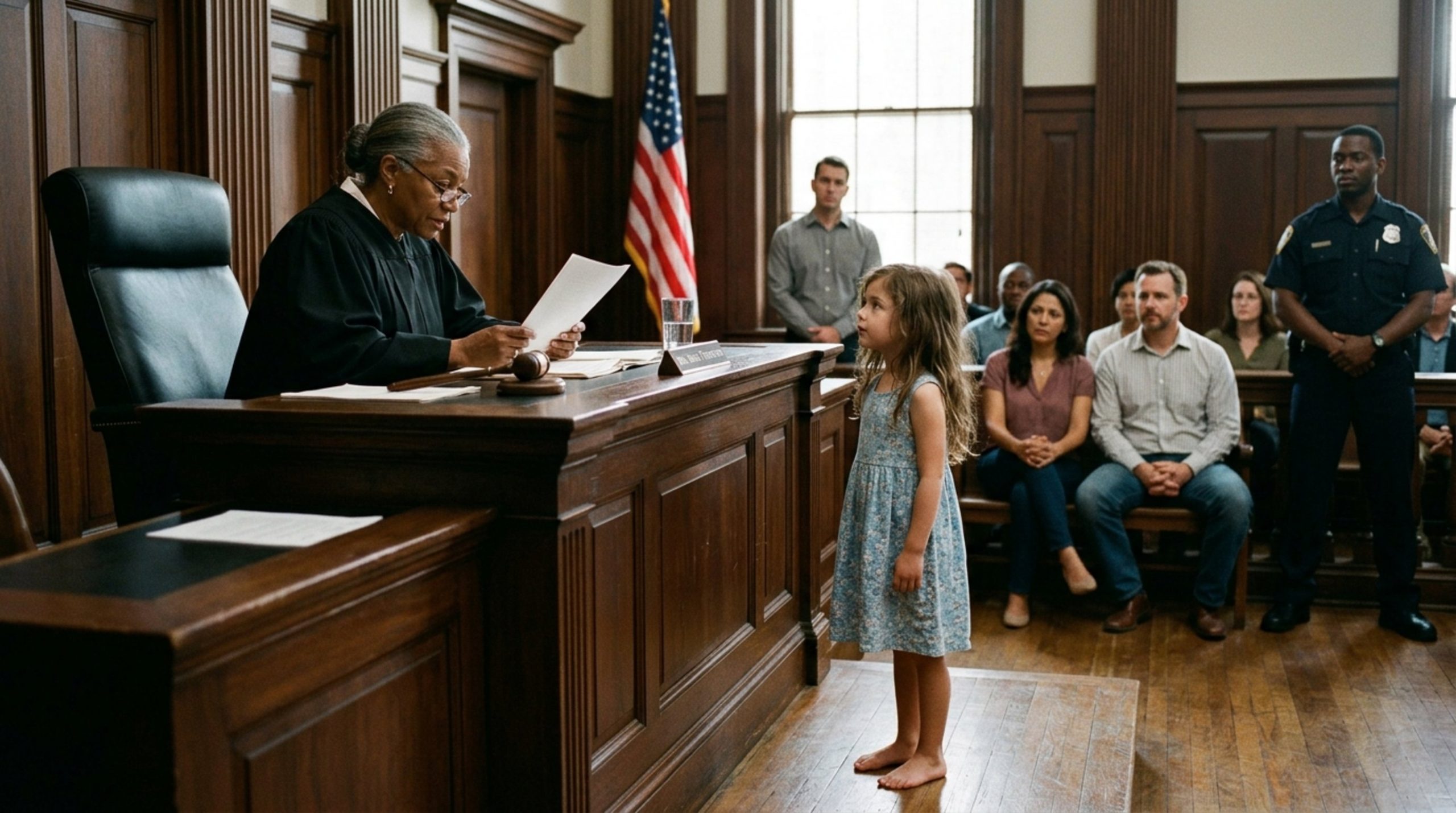
During a brief recess, Lily slipped from her aunt’s distracted grasp—she had been seated with her in the back row—and wandered toward the bench.
Her comment about my legs did not strike me as childish fantasy. It felt more like an offering—the kind a child makes when she believes the world can be bargained with by giving up something precious.
The bailiff started forward, cautious but ready. I lifted a hand to stop him.
“It’s all right,” I said quietly. “Let her speak.”
Relief softened Lily’s expression, as though she had just been granted permission to complete something essential.
“Daddy says you help people,” she continued. Her voice was steady, though her fingers trembled. “If you help him come home, I can teach you the breathing trick my mom taught me. It makes things wake up.”
A murmur rippled through the courtroom. Inside me, however, there was only a profound stillness. I did not hear a promise of miracles in her words—only a child’s earnest attempt to matter in a situation she had no power to control.
A decision beyond punishment
When the recess ended and everyone resumed their places, I cleared my throat and addressed the room, aware that each word carried weight far beyond those walls.
I spoke about the seriousness of theft, about the fragile trust that allows essential services to function, and about the necessity of accountability. But I also spoke of proportionality and context—because justice that ignores circumstance risks hardening into something rigid and blind.
Turning toward Jason, I said, “Mr. Hale, the law requires that I respond to what you have done. It also permits me to consider who you are and why you are standing here today.”